Thriving Plantz
Broadleaf Sage Organic
Broadleaf Sage Organic
Couldn't load pickup availability
Broadleaf Sage Organic
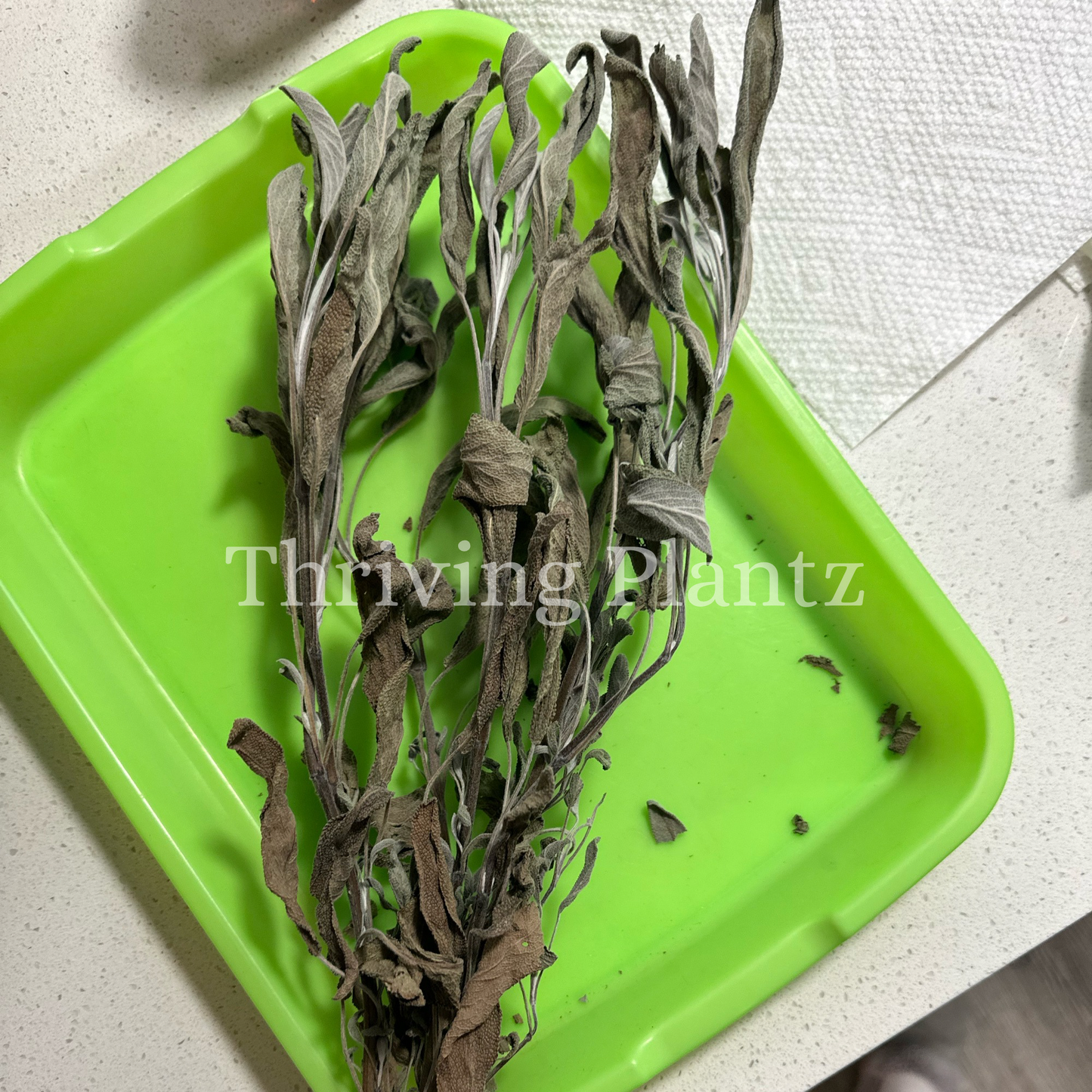
7 Days. Broad Leaved Sage has gray-green leaves with a mild, peppery, sweet flavor. Blooms of violet-indigo flowers can be seen in late spring through mid-summer and again in early fall. An evergreen subshrub that grows 18-24” tall with semi-woody stems. This frost tolerant herb is a great addition to many culinary dishes. Perfect for growing in containers, raised beds, and herb or rock gardens. Perennial zones 5-8.
Open-Pollinated. Non-GMO. Heirloom. Organic.
Drought and Frost Tolerant.
Disease, Pest, Deer and Rabbit Resistant.
*Approximately 40 Seeds
Maturity: 70-80 Days
Germination: 7-21 Days
Light Requirements: Full Sun
Planting Depth: 1/4”
Start Indoors: 8-10 weeks before average last frost
Direct Sow: 1-2 weeks after average last frost
Soil Needs: Fertile, sandy, well-drained
Plant Spacing: 24-36”
Plant Height: 18-24”
Row Spacing: 18-24”
Plant Spread: 24-36”
Start seeds indoors 8-10 weeks before the average first frost date. Plant 3-4 seeds per pot or cell 1/4” deep in seed starting mix. Keep seeds moist, not wet. Thin seedlings to 1 per pot or cell after the first set of true leaves appear. Transplant plants outside when they are about 4” tall with 2 sets of true leaves. Temperatures need to remain above 65°F before transplanting. Harden off plants before transplanting.
Plant in fertile, sandy, well-drained soil with a pH of 6.5-7.2 in an area that receives full sunlight. Before planting, mix 3-4” of compost and manure into the top 6” of the soil. Add 2-3” of mulch around the base of plants to help retain moisture, keep roots cool and suppress weeds. Water when the soil is dry 1” down. To help prevent disease, water at the base of plants.
Only fertilize plants with an organic, all-purpose fertilizer if growth slows, or plants show signs of nutrient deficiency. Harvest leaves in the morning in spring and early summer, right before plants flower. Use a sharp pair of scissors or garden shears to carefully remove 6-8” of the stem above a leaf node. Only remove 1/3 of the stems to allow plants to continue growing. Stop harvesting in early fall to allow plants to prepare for winter. Prune plants in spring to encourage bushier growth.
Share